
Myopia management: why we measure axial length, not just prescription
A child’s prescription tells you part of the story. Eye length tells you how fast myopia is really progressing — and whether treatment is working.
When a child is short-sighted, most parents are used to hearing their prescription creep up at each visit: -1.00, then -1.75, then -2.50. But the prescription is only a symptom. What actually changes is the length of the eye.
What is axial length?
Axial length is the distance from the front of the eye to the retina at the back. In myopia the eye grows slightly too long, so light focuses in front of the retina instead of on it. Every extra millimetre of growth matters: longer eyes carry a higher lifetime risk of retinal detachment, glaucoma and myopic macular degeneration.
How we measure it
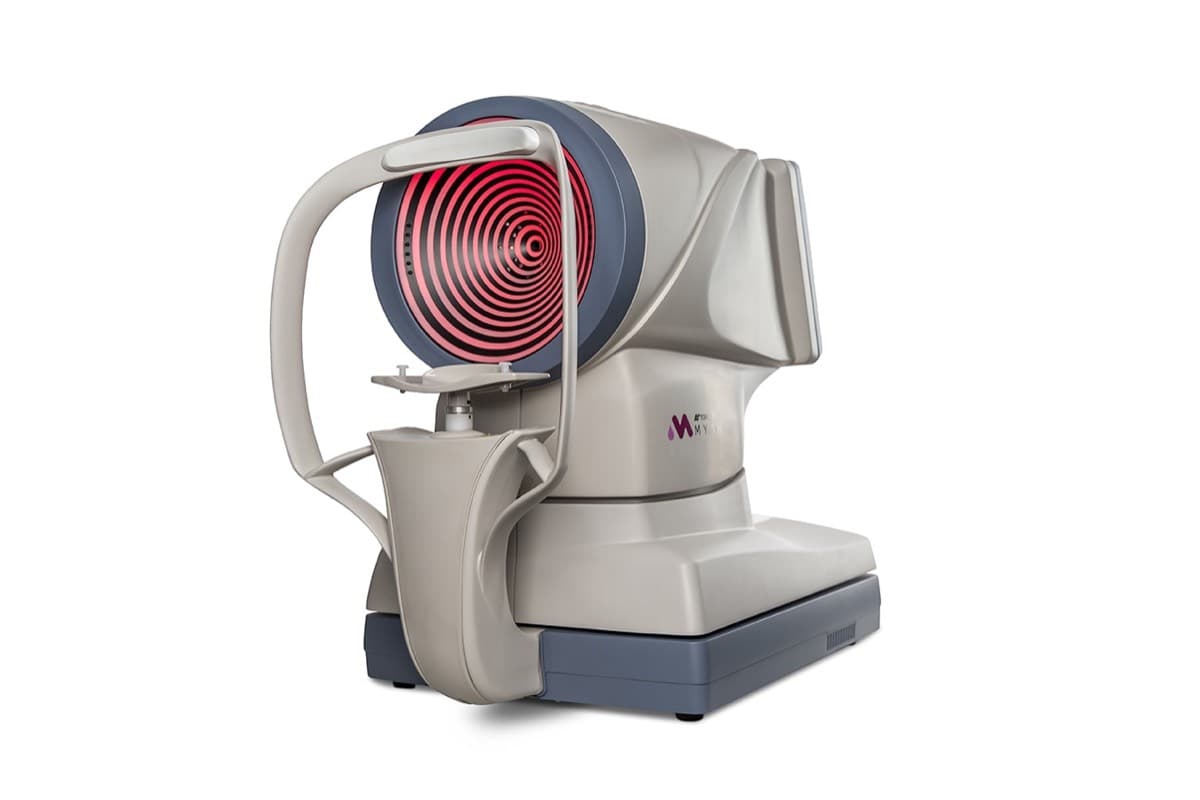
Our practices use the MYAH biometer, which measures axial length to a hundredth of a millimetre in a few seconds — no drops, nothing touches the eye. We plot the result on age-matched growth charts, exactly like a paediatrician plots height, so you can see whether your child’s eyes are growing faster than expected.
Why it changes the plan
- It shows progression months before the prescription does
- It tells us whether MyoCare lenses, MiSight or Night Lenses are actually slowing growth
- It gives you a clear, honest picture instead of guesswork
If there is short-sightedness in the family, or your child is squinting at the board, it is worth getting a baseline measurement early. Book a myopia assessment.